
Bajau Sea Nomads in Indonesia: The Ocean People of Sulawesi & Togean
Discover the Bajau Sea Nomads of Indonesia, their unique maritime culture, freediving traditions, stilt villages, and life across Sulawesi, Wakatobi, and the Togean Islands.
Discovering the Ocean People of Indonesia
Across the turquoise waters of eastern Indonesia lives one of the world’s most remarkable maritime cultures, the Bajau Sea Nomads.
Often called the “Ocean People” or “Sea Gypsies” of Southeast Asia, the Bajau have lived alongside reefs, tides, and open sea routes for centuries. Their story is deeply connected to the waters of Sulawesi, Wakatobi, and the remote islands scattered across the Coral Triangle.
For many travelers visiting Indonesia, encountering a Bajau village becomes one of the most memorable cultural experiences of a journey through Sulawesi. Not because it feels staged or touristic, but because life here still moves with the rhythm of the sea.
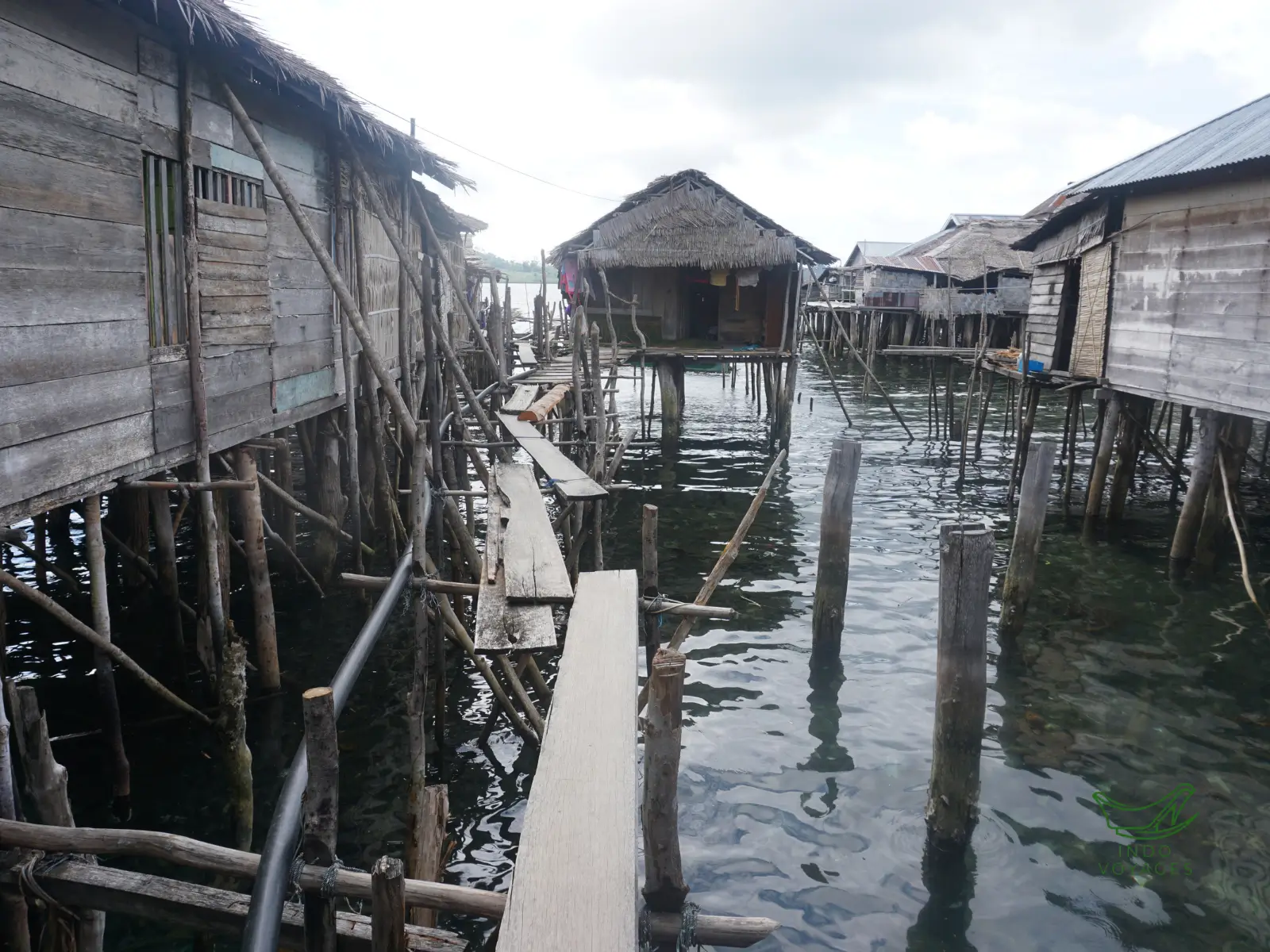
Wooden homes stand above shallow lagoons. Fishing boats drift quietly at sunrise. Children swim effortlessly between stilt houses before they can properly walk on land. The ocean is not simply part of daily life here, it is home, identity, memory, and survival.
Who Are the Bajau Sea Nomads?
The Bajau, also written as Bajo or Sama-Bajau, are a maritime ethnic group spread across Indonesia, Malaysia, and the southern Philippines. Historically, many Bajau communities lived almost entirely at sea aboard small wooden boats known as lepa-lepa.
Rather than building lives around farms or inland settlements, Bajau communities developed around fishing grounds, reef systems, seasonal currents, and inter-island travel routes.
Over generations, some communities remained mobile while others gradually established permanent villages above shallow coastal waters. Today, many Bajau families still live in traditional stilt-house settlements connected by narrow wooden bridges above coral lagoons.
Although modern borders divide Southeast Asia into countries, the Bajau identity has always been tied more closely to the sea than to political boundaries.
Why Are the Bajau Called “Sea Nomads”?
The term “Sea Nomads” comes from the Bajau’s traditional seafaring lifestyle.
For centuries, Bajau families traveled between islands in wooden boats, fishing, trading, and adapting to changing seasons and marine conditions. In some communities, entire families once spent most of their lives on the water without permanent land settlements.
Unlike most societies shaped by agriculture, the Bajau developed extraordinary maritime knowledge instead:
- Understanding reef ecosystems
- Reading tides and currents
- Navigating by stars and weather
- Traditional freediving techniques
- Sustainable fishing practices
- Boat-building craftsmanship
Even today, visiting a Bajau village in Sulawesi often feels like entering a community where the boundary between land and ocean barely exists.
The Extraordinary Freediving Culture of the Bajau
The Bajau are internationally known for their freediving abilities.
For generations, Bajau fishermen have dived repeatedly without scuba equipment to hunt fish, octopus, shellfish, and sea cucumbers. Many use only handmade wooden goggles, spears, and simple traditional tools.
Some Bajau divers can reach impressive depths and remain underwater for several minutes at a time.
Their abilities became globally recognized after scientific research suggested that many Bajau people possess genetically larger spleens compared to neighboring populations. The spleen plays an important role during breath-hold diving because it releases oxygen-rich red blood cells into the bloodstream underwater.
Researchers believe centuries of marine adaptation and diving traditions may have contributed to this remarkable physiological trait.
But beyond science, diving is also cultural knowledge passed through generations. In many communities, children grow up in the water from a very young age, developing comfort and confidence in the sea naturally through everyday life.
Bajau Villages in Indonesia
Indonesia is home to some of the largest Bajau communities in Southeast Asia.
In Sulawesi and eastern Indonesia, Bajau settlements can be found across coastal regions and remote islands including:
- The Togean Islands
- Wakatobi
- Southeast Sulawesi
- Central Sulawesi
- North Sulawesi
- Flores
- East Kalimantan
Many villages are built entirely above shallow water, with houses supported by wooden stilts over coral lagoons.
In places like the Togean Islands, visiting a Bajau community often happens during island-hopping journeys between remote beaches, reefs, and fishing villages. The experience feels natural rather than commercialized.
You may see fishermen repairing nets beneath their homes, women preparing seafood along wooden walkways, or children diving into crystal-clear water beside anchored boats.
Life here remains closely connected to tides, weather, and marine ecosystems.
The Bajau and the Coral Triangle
Many Bajau communities live within the Coral Triangle, one of the most biodiverse marine regions on Earth.
The waters around Sulawesi, Wakatobi, and the Togean Islands contain extraordinary coral reefs, fish species, and marine habitats that have supported Bajau livelihoods for generations.
Because of this close relationship with the ocean, traditional Bajau knowledge about reefs, currents, fishing seasons, and marine behavior is incredibly sophisticated.
For travelers interested in marine culture, anthropology, island life, or traditional ecological knowledge, learning about the Bajau offers a deeper understanding of Indonesia beyond typical tourism experiences.
Daily Life in a Bajau Village
While every community is different, daily life in many Bajau villages still revolves around the sea.
Early mornings often begin with fishermen leaving before sunrise. Wooden boats move quietly across calm lagoons while families prepare nets, seafood, or supplies for the day.
Children grow up surrounded by water. Swimming, balancing on boats, and understanding tides become natural parts of childhood.
Traditional Bajau culture also includes:
- Wooden boat-building traditions
- Oral storytelling and songs
- Seafood-based cuisine
- Traditional fishing knowledge
- Strong community relationships
- Maritime spiritual beliefs and ancestral traditions
Modernization has changed many communities, especially among younger generations, but maritime identity remains deeply important in Bajau culture.
Challenges Facing Bajau Communities Today
Like many indigenous maritime societies, Bajau communities face growing challenges in the modern world.
Environmental changes, coral reef degradation, overfishing, coastal development, and tourism pressure all affect communities that depend heavily on marine ecosystems.
In some parts of Southeast Asia, Bajau groups also face issues related to citizenship, access to healthcare, education, and displacement from traditional coastal areas.
At the same time, younger generations are increasingly connected to modern lifestyles, technology, and urban migration, creating cultural changes across many villages.
Because of this, respectful and responsible tourism is becoming increasingly important.
Visiting Bajau Villages Responsibly
Visiting a Bajau community should never feel like observing a human attraction.
These are living villages where families continue their daily routines, traditions, and livelihoods. Responsible cultural travel means approaching communities with curiosity, humility, and respect.
When visiting Bajau villages:
- Always ask permission before taking close-up photographs
- Dress respectfully
- Avoid treating communities as “tourist objects”
- Support local guides and small businesses when possible
- Respect marine ecosystems and coral reefs
- Listen more than you speak
- Understand that not every moment needs to become content for social media
The best experiences often come from simply slowing down and observing everyday island life naturally.
The Bajau Experience in Sulawesi
Sulawesi is one of the best places in Indonesia to better understand Bajau culture.
In the Togean Islands, Bajau villages are surrounded by calm turquoise waters, coral reefs, and remote island scenery. The atmosphere feels quiet, isolated, and deeply connected to nature.
In Wakatobi, Bajau communities exist alongside one of the richest marine ecosystems in the world, where fishing traditions and coral reef life remain closely linked.
What makes these experiences meaningful is not simply “seeing a village,” but understanding how generations of people have adapted to life between islands and ocean for centuries.
For many travelers, this becomes one of the most human and memorable parts of exploring Sulawesi.
Visitor Information (2026 Travel Update)
Location
Wakatobi Marine National Park (Southeast Sulawesi) & Togean Islands (Central Sulawesi). Accessible via local public boats or private charters from mainland hubs.
Entrance Fee
Entrance Fee: Free. This is a living indigenous community, not a commercial tourist attraction.
Boat Rental: IDR 200,000 – IDR 600,000+ depending on distance. Always purchase fresh fish, snacks, or crafts directly from villagers to support the local economy.
Recommended visit duration
2 to 4 hours for a respectful day visit, or 1–2 nights if a local community homestay is pre-arranged.
Local Guide
Highly Recommended (Crucial). A local guide who speaks the Bajau dialect is essential to act as a cultural bridge, introduce you to village elders, and prevent accidental breaches of local customs.
Best Time to Visit
Dry/Calm Sea Season (September – November & April – May): Essential for safe boat travel and to see normal daily life. Avoid monsoon seasons (June–August) when rough seas halt all activities.
Best Time of Day: 06:00 AM – 09:00 AM (watching fishermen return with their catch) or 16:00 PM – 18:00 PM (cooler weather when the community gathers outside).
- Best Time of Day: Early morning (06:00 – 09:00 AM) to see the fishermen returning with their catch, or late afternoon (16:00 – 18:00 PM) when the heat dies down and children are playing in the water.
- Privacy First: Always ask for permission before taking photos of individuals, especially children or people inside their homes.
- Dress Code: Dress modestly (shoulders and knees covered) out of respect for the predominantly Muslim Bajau communities.


Frequently Asked Questions About Bajau Sea Nomads
Some Bajau communities still maintain semi-nomadic traditions, but many now live in permanent stilt-house villages across Indonesia, Malaysia, and the Philippines. Fully boat-based lifestyles are becoming increasingly rare.
Some of the best-known Bajau communities in Indonesia can be found in the Togean Islands, Wakatobi, Southeast Sulawesi, and other coastal regions of Sulawesi and eastern Indonesia.
The Bajau are known for traditional freediving skills developed through generations of fishing and marine hunting. Scientific studies have also explored possible physiological adaptations related to breath-hold diving.
Seafood forms the foundation of traditional Bajau cuisine, including fish, shellfish, squid, sea cucumber, and other marine resources gathered from nearby reefs and coastal waters.
In some regions, travelers may visit or stay near Bajau communities as part of island journeys or cultural experiences. However, respectful interaction and responsible tourism are extremely important.
“Bajo” is the Indonesian spelling commonly used in Indonesia, while “Bajau” is more widely used internationally. Both generally refer to related Sama-Bajau maritime communities across Southeast Asia.
Yes, especially for travelers interested in culture, remote islands, anthropology, marine life, and authentic local experiences beyond mainstream tourism. Visiting respectfully with local insight can become one of the highlights of a Sulawesi journey.
Explore Sulawesi With Local Insight
Understanding Bajau culture goes far beyond reading history or stopping briefly at a village.
The deeper experience comes from traveling slowly, understanding local context, and exploring the islands with people who know the region personally.
At Indo Voyages, journeys across Sulawesi and eastern Indonesia are designed around meaningful experiences, local perspectives, island culture, and responsible travel, from the Togean Islands and Wakatobi to remote coastal communities rarely included in mainstream itineraries.
Rather than rushing between destinations, the focus is on discovering the stories, traditions, and human connections that make these islands unique.


 EN
 ID
 FR