
Suaya, Toraja - The Royal Cliff Burial Site of Sangalla Kings
Suaya is one of the most culturally significant cliff burial sites in Tana Toraja, located in the Sangalla area of South Sulawesi. Known for its royal tombs carved into limestone cliffs and the presence of tau-tau statues, this site reflects how Torajan society honors ancestry and social lineage.
What is Suaya in Tana Toraja?
Suaya is a traditional cliff burial site located in Sangalla, Tana Toraja, South Sulawesi, Indonesia. It has long been associated with royal and noble families of the region, making it one of the more historically significant burial grounds in Toraja culture.
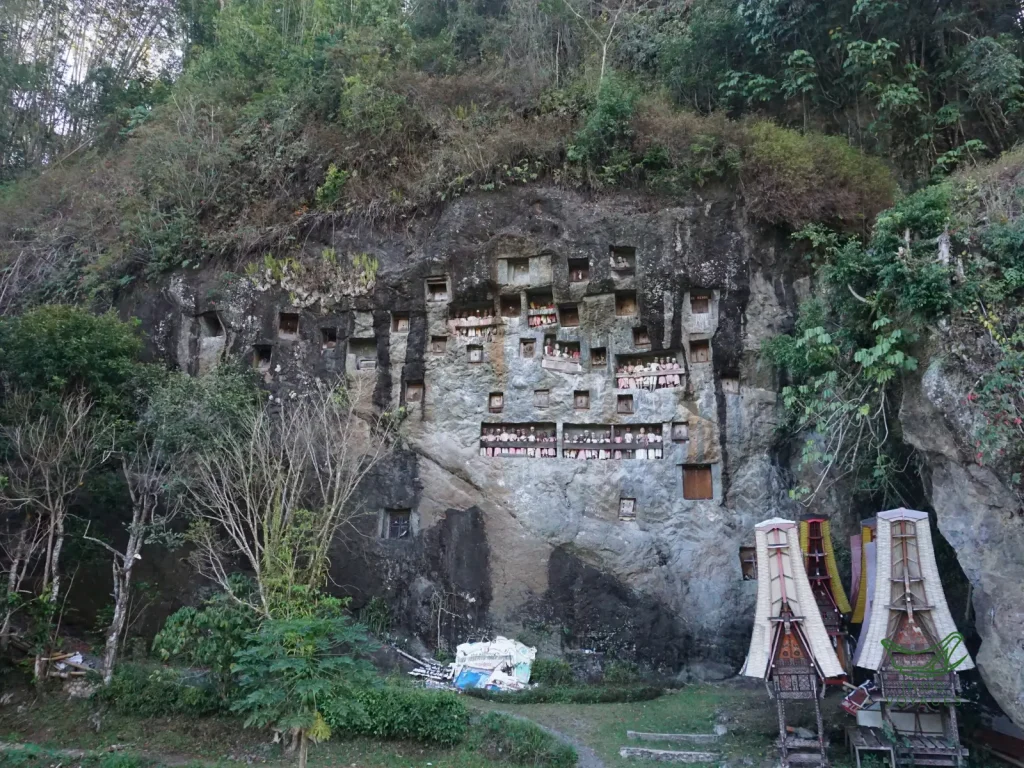
The burial chambers are carved directly into steep limestone cliffs, where coffins are placed inside rock cavities. In front of or near these burial spaces, you may also find tau-tau statues representing the deceased.
Suaya is not only a burial site but also a reflection of Torajan social structure, where family lineage, status, and ancestral respect are expressed through burial traditions.
Royal Burial Tradition in Sangalla, Toraja
The identity of Suaya is closely connected to the historical Sangalla kingdom area. In Torajan tradition, burial sites are often linked to specific family lines, and Suaya is particularly known for its connection to noble descendants.
Each burial placement reflects a combination of:
- Family lineage and inheritance
- Social status within Torajan society
- Long-standing ritual traditions passed through generations
These practices show how death in Toraja is not treated as separation, but as a continuation of social and familial identity.
Tau-tau Statues in Suaya
One of the most recognizable elements of Suaya is the presence of tau-tau, wooden effigies that represent the deceased.
These statues are carefully crafted to resemble individuals and are traditionally dressed in clothing that reflects their identity and status.
In Suaya, tau-tau serve several cultural roles:
- A physical representation of ancestors
- A symbol of respect and remembrance
- A connection between the living family and the spirit world
They are placed facing outward from the cliffs, symbolically watching over the land and their descendants.
Cliff Burial Landscape of Suaya
Suaya is set within the dramatic limestone cliffs typical of the Toraja highlands. The burial chambers are carved into vertical rock formations, creating a striking contrast between natural landscape and human cultural expression.
The surrounding area is characterized by:
- Steep limestone cliffs with burial cavities
- Green valleys and agricultural land below
- Traditional villages in the wider Sangalla region
This combination makes Suaya not only culturally meaningful but also visually distinctive within the Toraja region.
Cultural Meaning Behind Suaya Burial Site
Suaya reflects a deeper Torajan philosophy where life, death, and ancestry are closely connected.
In Torajan belief systems:
Death is a transition, not an immediate separation
The deceased remain part of family life through ritual and memory
Burial sites are extensions of social identity
Ancestors continue to play a symbolic role in the living world
Because of this, places like Suaya are not forgotten spaces, they remain culturally active within Torajan society.
Suaya in the Context of Toraja Burial Culture
Toraja is home to multiple cliff and cave burial traditions, and Suaya is part of this broader cultural network.
Other well-known sites in the region include:
- Lemo, known for cliffside rows of tau-tau
- Londa, famous for cave burial chambers
Compared to these sites, Suaya is often recognized for its strong association with royal lineage and its historical connection to the Sangalla aristocracy.
Each site offers a different perspective on Toraja’s burial traditions, but together they form a larger cultural landscape that defines the region.
Responsible Travel in Suaya
Suaya is still considered a culturally sensitive and ancestral site. Visitors are expected to approach it with respect and awareness of its significance to local communities.
Guidelines for responsible travel include:
- Do not touch or disturb burial structures or tau-tau
- Maintain a respectful distance from sacred areas
- Ask permission before taking photographs where needed
- Follow instructions from local guides or community members
- Avoid loud or disruptive behavior on site
Respecting these practices helps preserve Suaya as a living cultural heritage site for future generations.
Experience Suaya with Cultural Understanding
Suaya is best understood not only as a historical site, but as part of a living tradition that still shapes how Torajan communities view ancestry and identity.
Many of the meanings behind its burial structures, tau-tau, and cliff placements are rooted in local knowledge that is best explained through cultural context rather than surface observation alone.
For travelers who want to explore Toraja in a more meaningful way, Suaya is often visited as part of a wider cultural journey across the highlands, where each site reveals a different layer of Torajan heritage, landscape, and tradition.
How to Get to Suaya, Tana Toraja
Suaya is located in the Sangalla area, not far from Makale in Tana Toraja. It is accessible by road and is commonly included in cultural tour routes across the Toraja highlands.
Visitors usually reach Suaya by private car or with a local driver, often combining it with other nearby heritage sites in a single day itinerary. The journey passes through scenic highland landscapes, traditional villages, and agricultural valleys.
Because of its cultural context, Suaya is often best visited with someone who can explain the meaning behind what you are seeing on site.
Explore Suaya with a Local Toraja Perspective
Suaya is not just about what you see, but about understanding the story behind it, how royalty, ancestry, and cultural identity are preserved within the cliffs of Sangalla.
To experience this context more deeply, many travelers explore Suaya as part of a guided cultural journey across Tana Toraja, where local insight helps connect each site into a larger narrative of Torajan heritage and living tradition.
Visitor Information (2026 Travel Update)
Location
Kaero, Bulian Masa'bu, Sangalla District, Tana Toraja, South Sulawesi (±10 km east of Makale or ±23 km south of Rantepao).
Entrance Fee
Around IDR 15,000–20,000 per person.
Recommended visit duration
45–60 minutes (Sufficient time to appreciate the royal cliff face, study the specialized royal Tau-tau, and climb the stone steps up the side of the cliff).
Local Guide
Recommended. Highly valuable for unlocking the history of the Sangalla Kingdom, understanding the specific noble lineages (Puang), and learning why the Tau-tau effigies here wear distinct royal attire.
Best Time to Visit
Morning to mid-day (09:00 AM – 13:00 PM). The natural sunlight during these hours provides the best visibility for the deep-set rock alcoves and balconies cut into the limestone.
Prices and arrangements may vary depending on local community management.
Nearby Places in Toraja
Suaya is commonly visited together with:


These sites are often combined into a half-day or full-day cultural journey through Toraja.
Frequently Asked Questions About Suaya Sangalla Toraja
Suaya is located in the Sangalla area of Tana Toraja, South Sulawesi, Indonesia, around southeast of Makale in the southern Toraja Highlands. The site is surrounded by rice fields, limestone cliffs, and traditional Torajan villages that form part of the cultural landscape of Sangalla.
Suaya is famous as the royal burial site of the Sangalla kingdom. The cliffside cemetery contains ancient stone graves, tau tau effigies, and burial chambers associated with Torajan noble families and royal descendants. It is considered one of the most historically important burial sites in Toraja.
Suaya represents the connection between ancestry, nobility, and ceremonial traditions in Torajan society. Historically, only descendants of the Sangalla royal lineage were buried at the site, making it not only a burial complex but also a symbol of social status, heritage, and family identity within Toraja culture.
Visitors can see cliff-carved graves, traditional wooden coffins, tau tau statues placed on balconies in the rock face, and old burial chambers embedded into the limestone cliffs. Some areas also contain preserved historical coffin remains and ancestral artifacts connected to Torajan funeral traditions.
Tau tau are wooden effigies representing deceased individuals. In Toraja tradition, these statues symbolize the presence and memory of ancestors and are often placed near burial sites overlooking the land. Historically, tau tau were mainly associated with noble families because of the high ceremonial and social significance attached to them.
According to local historical accounts and tourism documentation, Suaya was traditionally reserved for the kings of Sangalla and members of noble or royal families connected to the Sangalla lineage. The elaborate cliff graves and presence of tau tau reflect the high status of those buried there.
Compared to Lemo and Londa, Suaya is often associated more strongly with royal ancestry and the Sangalla nobility. The atmosphere is generally quieter and less crowded, while the burial site itself emphasizes royal lineage, cliff tombs, and ancestral heritage connected specifically to the Sangalla kingdom.
Yes. Suaya remains a sacred ancestral site for local communities in Toraja. Visitors are expected to show respect, avoid touching sacred objects unnecessarily, and understand that the site represents living cultural heritage rather than only a tourist attraction.
Yes. Suaya is closely connected to the history of Sangalla nobility, while nearby Buntu Kalando is associated with the traditional residence and heritage of the Sangalla royal family. Many visitors explore both places together to better understand the historical and cultural legacy of Sangalla in Toraja.
Morning and late afternoon are usually the best times to visit Suaya because temperatures are cooler and lighting conditions are better for sightseeing and photography. The dry season generally offers easier access to the pathways and surrounding village areas.
Yes, visitors can explore Suaya independently. However, visiting with a local guide is highly recommended because many aspects of the site, including burial symbolism, royal lineage, tau tau, and Torajan funeral philosophy are deeply rooted in cultural traditions that may not be immediately visible to travelers.
Explore Suaya with Local Insight
Suaya is more than a royal burial site carved into stone cliffs. It is a reflection of Torajan ancestry, social structure, spiritual beliefs, and the historical legacy of the Sangalla kingdom within the highlands of South Sulawesi.
As a Sulawesi-based local tour operator, Indo Voyages offers cultural journeys across Toraja that help travelers experience heritage sites with deeper understanding, respectful interpretation, and meaningful local insight.


 EN
 ID
 FR