
Palawa Village - Traditional Tongkonan Heritage in Toraja
Palawa Village is one of the oldest traditional villages in Tana Toraja, famous for its Tongkonan houses and preserved cultural heritage. Located near Rantepao, this iconic highland village offers a unique look into traditional architecture and local life.
What is Palawa Village?
Palawa is a traditional Torajan settlement located in Sesean District, North Toraja, around 12 kilometers from Rantepao. The village is famous for its well-preserved Tongkonan houses, the ancestral homes of Torajan families that serve not only as residences, but also as important ceremonial and social spaces.
Unlike modern villages that preserve only fragments of traditional architecture, Palawa still retains the layout of a classic Torajan settlement. Rows of Tongkonan houses stand facing alang, the traditional rice barns positioned directly opposite them. Around the village are bamboo groves, gardens, and rice fields that complete the traditional highland setting.
The atmosphere of Palawa feels deeply connected to Toraja’s ancestral past. Many travelers describe the village as both majestic and mysterious, especially during cloudy mornings when the dark wooden houses and towering bamboo roofs appear through the mountain mist.
The Architecture of Tongkonan Houses
The main attraction of Palawa is its collection of traditional Tongkonan houses. These houses are instantly recognizable for their dramatic curved roofs that resemble boats or buffalo horns depending on interpretation.
The architecture carries deep symbolic meaning in Torajan culture. The houses are traditionally built facing north, a direction associated with origins and ancestry in Torajan belief systems. Every part of the structure reflects social identity, family lineage, and ceremonial responsibility.
Distinctive Features of Tongkonan Houses
- Large curved bamboo roofs layered to resist tropical rain
- Elevated wooden structures built on strong timber pillars
- Hand-carved wooden panels with symbolic Torajan motifs
- Rows of buffalo horns displayed on the front pillars
- Traditional alang rice barns facing the houses
Buffalo Horns and Social Status in Toraja
- Black represents death
- Red symbolizes human life
- White represents purity
- Yellow symbolizes divine blessing and prosperity
The History and Origins of Palawa
Local oral history connects the origins of Palawa to ancestral figures who settled the area centuries ago. According to Torajan stories, the village developed gradually as descendants built additional Tongkonan houses around the original settlement.
Historical accounts suggest the first Tongkonan in Palawa was established in the late 18th century, eventually growing into the traditional village seen today.
Like many places in Toraja, Palawa is deeply tied to stories of ancestry, clan identity, and historical conflict between communities in the highlands. These oral traditions remain an important part of Torajan cultural memory and are still shared by local families today.
Why Palawa is One of the Best Cultural Villages in Toraja
Palawa is considered one of the best places to experience traditional Torajan architecture because the village remains visually authentic and relatively accessible from Rantepao.
Many travelers visit Palawa to:
See authentic Tongkonan houses up close
Learn about Torajan culture and ancestry
Photograph traditional architecture
Explore rural life in the Toraja highlands
Understand the symbolism behind Torajan ceremonies
Compared to some larger cultural sites, Palawa feels quieter and more atmospheric. The aged bamboo roofs, fading carvings, mountain air, and surrounding rice fields create a setting that feels both historical and alive.
Traditional Life and Cultural Preservation
Although Palawa is a popular cultural destination, it is still a living community where families continue to maintain ancestral traditions.
Tongkonan houses are not museums. They remain important gathering places for family discussions, rituals, ceremonies, and community decisions. In Torajan culture, the Tongkonan represents the spiritual and social center of the family lineage.
Maintaining these houses requires significant effort and expense. Traditional Tongkonan structures are built using selected hardwoods and bamboo roofing techniques that can survive for generations when properly maintained.
Even today, restoring or building a Tongkonan can cost an enormous amount due to the craftsmanship, ceremonial requirements, and traditional materials involved.
Best time to visit
The best time to visit Palawa is during the morning or late afternoon when the mountain light creates dramatic scenery around the traditional houses.
The dry season generally offers easier road access and better conditions for exploring the village and nearby attractions in North Toraja.
Travelers interested in Torajan ceremonies should consider visiting during the cultural season when funeral ceremonies and traditional gatherings are more likely to take place in different parts of Toraja.
Visitor Information (2026 Travel Update)
Location
Palawa Village, Sesean District, North Toraja, South Sulawesi (±10–12 km north of downtown Rantepao, along the route leading towards Mount Sesean/Batutumonga).
Entrance Fee
Around IDR 15,000–25,000 per person (Excludes small vehicle parking fees).
Recommended visit duration
45–60 minutes (Ample time to walk along the row of historical Tongkonan, marvel at the ancient structures, and browse local handicrafts).
Local Guide
Recommended. Palawa is a living historical monument. A guide is highly valuable to explain the specific lineage of this village, the architectural evolution of their roofs, and the complex societal status reflected by the massive collection of buffalo horns.
Best Time to Visit
Morning (08:00 AM – 10:30 AM) or Late Afternoon (15:30 PM – 17:00 PM). The morning sun beautifully illuminates the front facades of the Tongkonan (which face north), making it the perfect time for high-contrast heritage photography and comfortable walking temperatures.
Prices and arrangements may vary depending on local community management.
Nearby Places in Toraja
Londa is commonly visited together with:
Ke’te Kesu Traditional Village

Lemo Cliff Burial Site
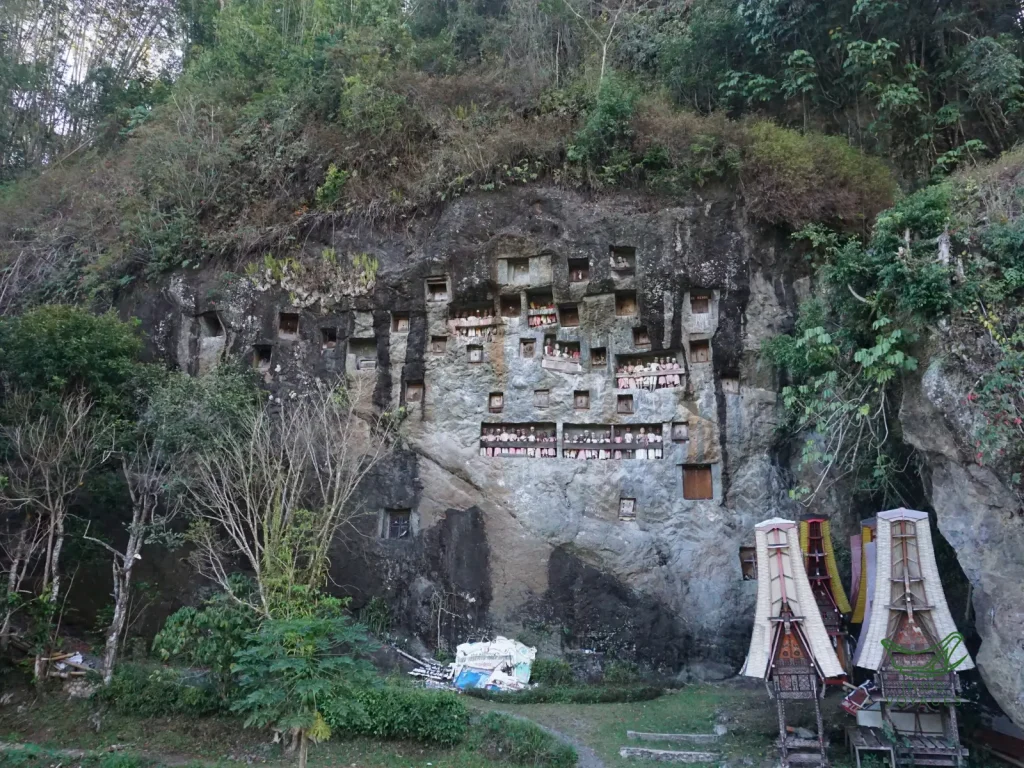
Bori’ Kalimbuang Megalithic Site

These sites are often combined into a half-day or full-day cultural journey through Toraja.
Experience Londa with Local Insight

Understanding Londa goes beyond seeing caves and coffins. Its meaning comes from stories, cultural practices, and ancestral traditions that are deeply embedded in Toraja life.
As a local tour operator based in Toraja and Sulawesi, Indo Voyages provides culturally guided experiences that help travelers understand Londa in its proper context. With local knowledge and community connections, visitors gain a deeper appreciation of how landscape, ancestry, and tradition remain interconnected in Toraja culture.
Frequently Asked Questions About Londa
Londa is located in Sanggalangi District, North Toraja, about 7 km from Rantepao in South Sulawesi.
Yes, visitors can explore parts of the limestone cave with local guides and lanterns.
Tau tau are wooden ancestral effigies representing deceased members of Toraja families.
Yes, Londa remains an active and respected ancestral burial site for local communities.
Most visitors spend around 1–2 hours depending on exploration depth and itinerary.
A local guide is highly recommended for safety and cultural understanding.
Plan Your Toraja Journey
Londa is best experienced as part of a broader journey through Toraja, where burial sites, traditional villages, ceremonies, and mountain landscapes form a connected cultural experience.
Indo Voyages offers locally guided journeys across Toraja and Sulawesi designed for travelers seeking meaningful cultural travel and responsible exploration.
Explore Toraja With Local Insight
- Visit Londa and nearby cultural sites
- Learn Toraja traditions with local guides
- Combine villages, landscapes, and heritage sites
- Create a customized Sulawesi itinerary


 EN
 ID
 FR