
Londa Burial Caves, Toraja – Cliff Graves & Ancient Cultural Heritage
Explore Londa Burial Caves in Toraja, South Sulawesi, a sacred limestone cave site known for cliff graves, tau tau statues, and ancient Toraja burial traditions.
Have You Ever Heard of Londa Burial Caves in Toraja?

Londa Burial Caves is one of the most iconic and historically significant cultural sites in Tana Toraja, South Sulawesi. Located around 6–7 km from Rantepao, this ancient limestone cave system has been used for generations as a burial place by local Torajan families.
Unlike a conventional cemetery, Londa reflects a deeply rooted belief system where death is not viewed as an ending, but as a continuation of existence. The deceased are placed inside natural caves and cliffside chambers, symbolically remaining part of the family and the surrounding landscape.
Today, Londa is both a sacred heritage site and one of the most visited cultural attractions in Toraja, often included in cultural tours guided by local experts such as Indo Voyages, a local tour operator based in Toraja and Sulawesi.
The Cultural Meaning of Londa
To understand Londa, it is important to understand the Torajan worldview of life and death.
In Toraja culture, death is not considered an immediate separation. The deceased remain part of the family through rituals, remembrance, and ongoing ceremonial traditions. One of the most important ceremonies is Rambu Solo’, a complex funeral tradition that reflects social identity, respect, and ancestral connection.
Londa represents this belief physically, where cliffs, caves, and wooden coffins become a continuous space between the living and their ancestors. The site remains culturally significant and respected by local communities today.

What Makes Londa Unique?
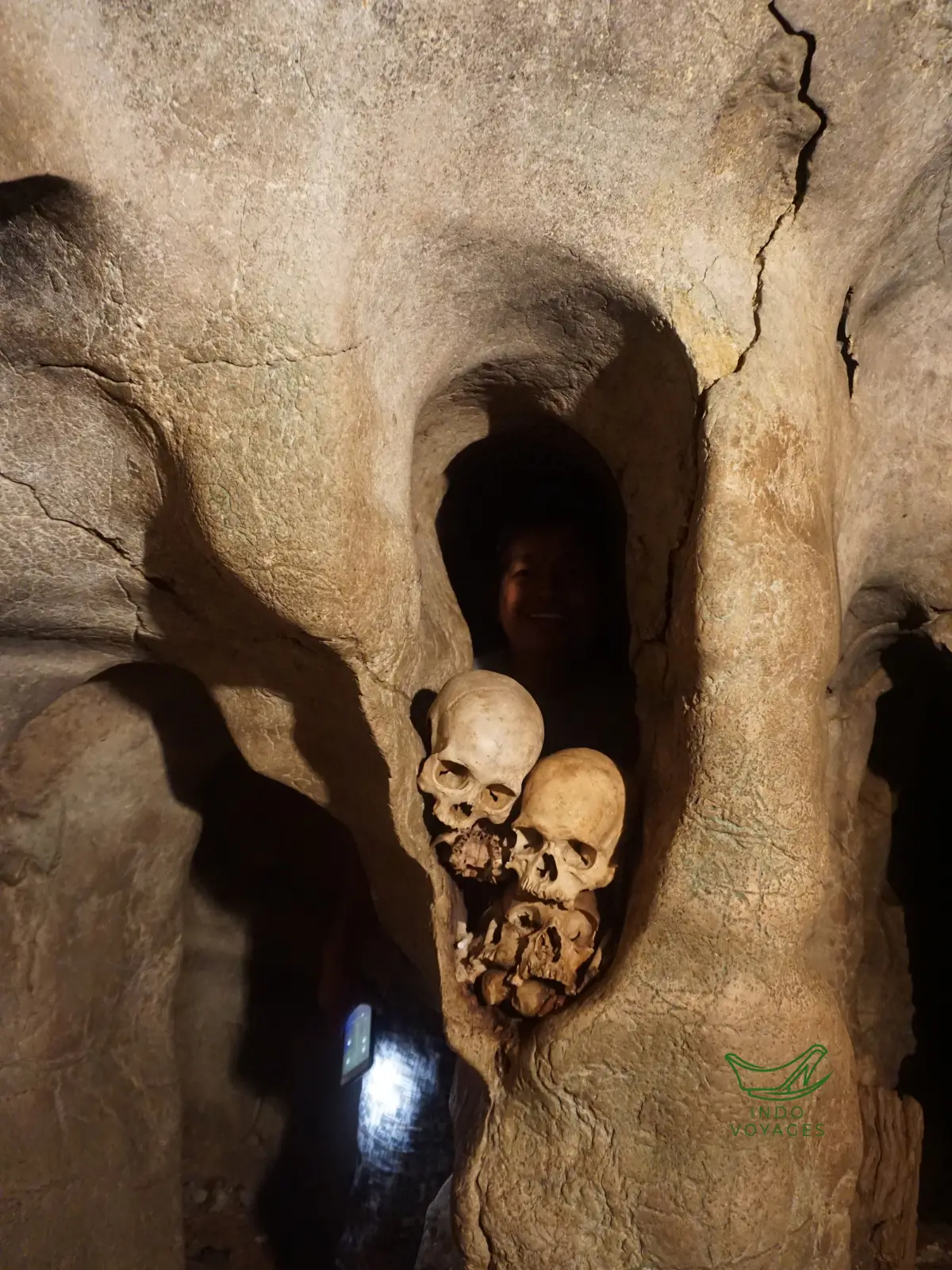
Londa is not just a single cave, but a natural burial complex carved into limestone cliffs. The site has been used for generations and continues to hold cultural significance for local families.
What makes Londa special is the way it combines natural formations with ancestral traditions. Coffins are placed both inside cave chambers and along cliff ledges, creating a vertical cultural landscape that reflects Toraja’s social and spiritual worldview.
Unlike many staged tourist attractions, Londa still feels authentic and closely connected to local community traditions.
Main Highlights of Londa Burial Caves
1. Cliffside Coffins (Erong)
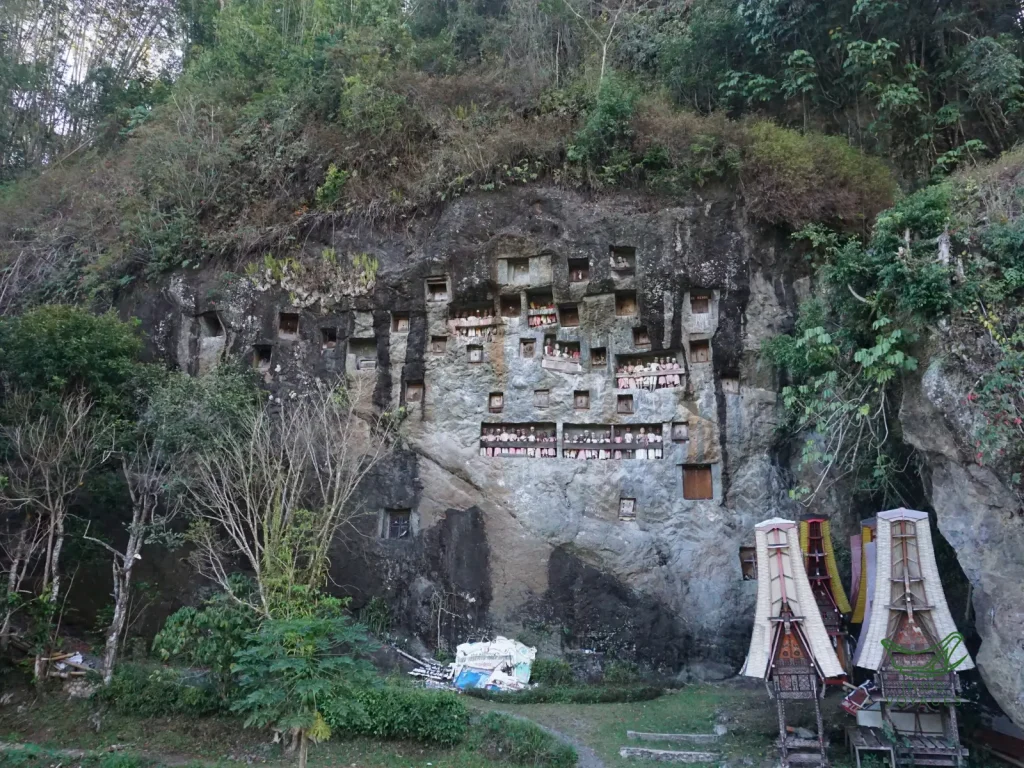
One of the most striking features of Londa is the wooden coffins known locally as erong. These are placed along limestone cliffs and inside carved niches.
Their positioning often reflects family lineage and traditional social structure. Over time, these coffins have become part of the cliff itself, blending human history with natural rock formations.
2. Tau-Tau Effigies (Ancestral Figures)
At several points near the cave entrance and cliff edges, visitors can see wooden statues known as tau-tau. These life-sized figures represent the deceased and are crafted to resemble their appearance.
In Toraja culture, tau-tau are not decorative objects, but symbolic representations of ancestral presence, watching over their descendants and land.

3. Lantern Cave Experience

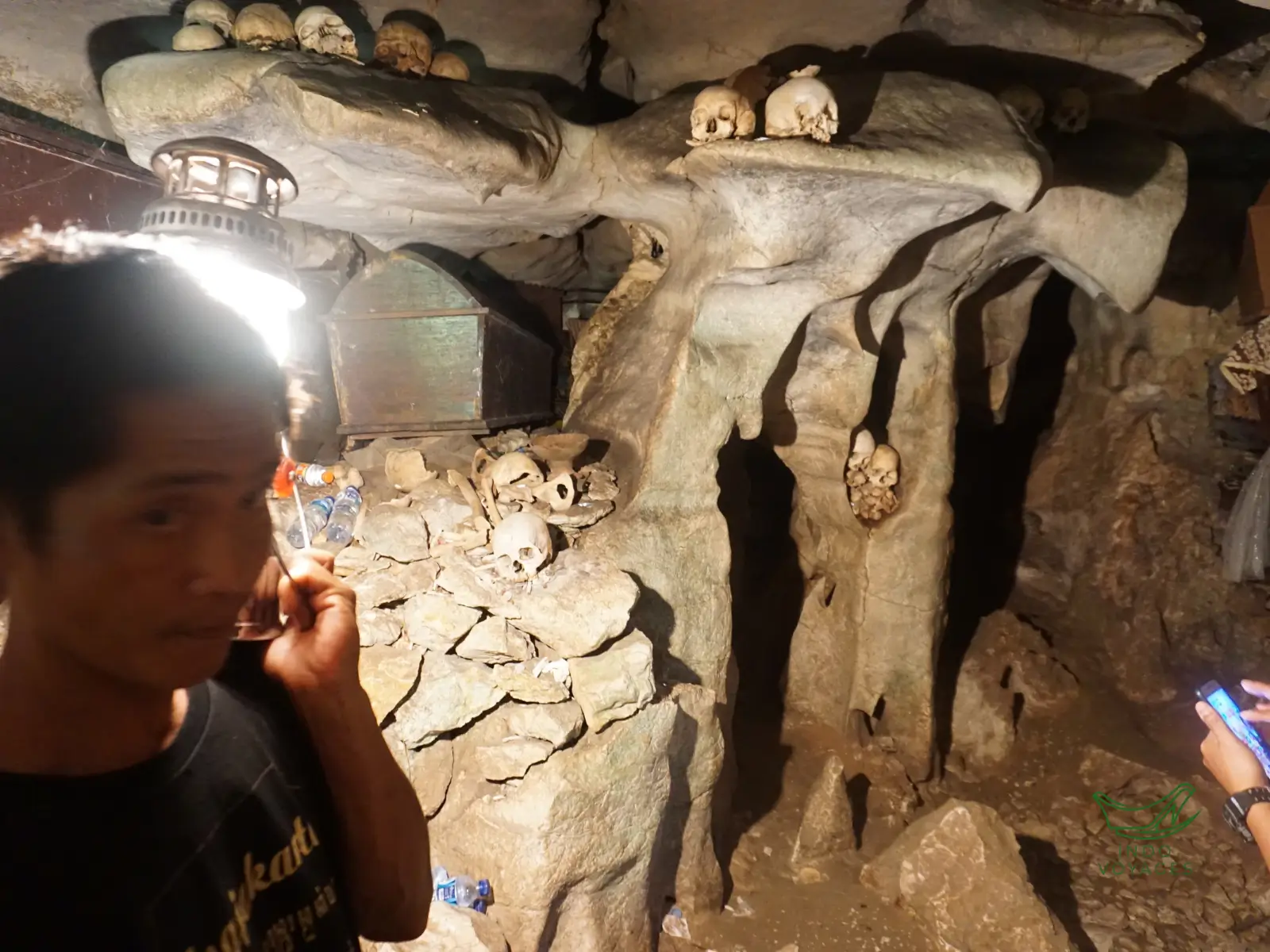
Inside the limestone cave, visitors can walk through narrow passageways filled with coffins, bones, and natural rock formations.
The interior is naturally dark, and visitors typically explore with a local guide using a lantern or flashlight. The cave environment is quiet, cool, and atmospheric, offering a rare glimpse into centuries-old burial traditions.
4. Local Stories and Oral Traditions
Londa is also known for its oral storytelling traditions passed down through generations. Local guides often share stories linked to specific burial areas inside the cave, including symbolic narratives about family, love, and ancestral values.
These stories are part of Toraja’s living culture, where history is preserved not only in physical form but also through spoken tradition.

5. Highland Landscape Around Londa

The journey to Londa passes through rice fields, traditional villages, and limestone hills of the Toraja highlands, making it easy to combine with other cultural destinations nearby.
Visiting Londa Respectfully
Londa is an active sacred burial site. Visitors are expected to behave respectfully at all times.
- Do not touch coffins, bones, or ceremonial objects
- Keep voices low and respectful
- Dress appropriately for a cultural site
- Follow instructions from local guides
- Take photographs respectfully
Responsible behavior helps preserve both the cultural meaning and physical integrity of the site.
How to Get to Londa
Londa is easily accessible from Rantepao by car, scooter, or local transport. The drive takes around 10–15 minutes through scenic highland roads surrounded by rice fields and traditional villages.
It is commonly included in cultural itineraries such as:
- Ke’te Kesu Cultural Village
- Lemo Cliff Burial Site
- Bori’ Kalimbuang Megalithic Site
Visitor Information (2026 Travel Update)
Location
Sanggalangi District, North Toraja, South Sulawesi (Sanggalangi, North Toraja (±7 km from Rantepao)
Entrance Fee
Around IDR 15,000-25,000 per person
Recommended visit duration
1–2 hours
Local Guide
Recommended for cultural explanation and cave navigation
Best Time to Visit
Morning or late afternoon for best lighting and comfort
Lantern Rental
Around IDR 30,000–50,000
Prices and arrangements may vary depending on local community management.
Nearby Places in Toraja
Londa is commonly visited together with:


These sites are often combined into a half-day or full-day cultural journey through Toraja.
Experience Londa with Local Insight
Understanding Londa goes beyond seeing caves and coffins. Its meaning comes from stories, cultural practices, and ancestral traditions that are deeply embedded in Toraja life.
As a local tour operator based in Toraja and Sulawesi, Indo Voyages provides culturally guided experiences that help travelers understand Londa in its proper context. With local knowledge and community connections, visitors gain a deeper appreciation of how landscape, ancestry, and tradition remain interconnected in Toraja culture.
Frequently Asked Questions About Londa
Londa is located in Sanggalangi District, North Toraja, about 7 km from Rantepao in South Sulawesi.
Yes, visitors can explore parts of the limestone cave with local guides and lanterns.
Tau tau are wooden ancestral effigies representing deceased members of Toraja families.
Yes, Londa remains an active and respected ancestral burial site for local communities.
Most visitors spend around 1–2 hours depending on exploration depth and itinerary.
A local guide is highly recommended for safety and cultural understanding.
Plan Your Toraja Journey
Londa is best experienced as part of a broader journey through Toraja, where burial sites, traditional villages, ceremonies, and mountain landscapes form a connected cultural experience.
Indo Voyages offers locally guided journeys across Toraja and Sulawesi designed for travelers seeking meaningful cultural travel and responsible exploration.
Explore Toraja With Local Insight
- Visit Londa and nearby cultural sites
- Learn Toraja traditions with local guides
- Combine villages, landscapes, and heritage sites
- Create a customized Sulawesi itinerary


 EN
 ID
 FR